![[personal profile]](https://www.dreamwidth.org/img/silk/identity/user.png) deborahjross
deborahjrossSeveral years ago, I realized I wasn't dealing with my son's autism diagnosis very well. 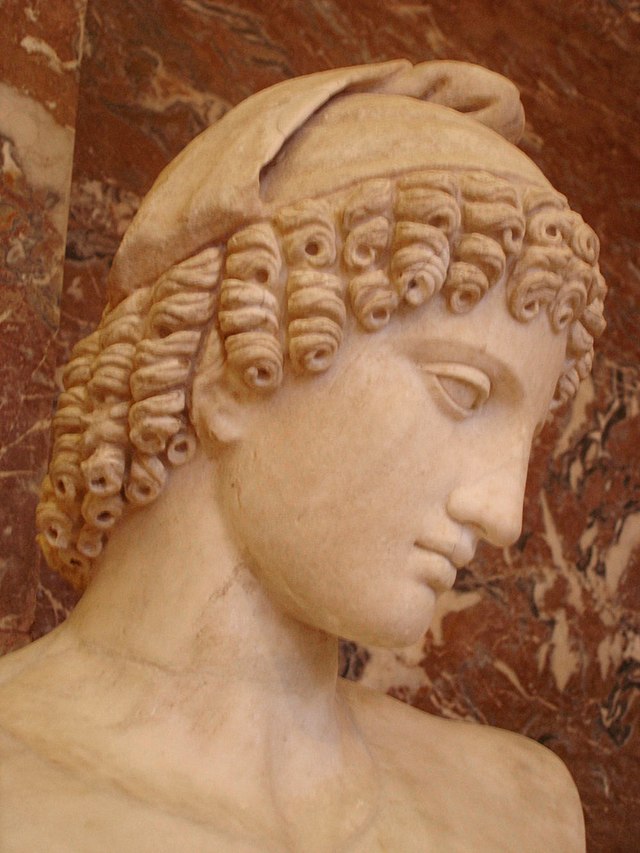 Too much rage, too much helplessness. Just too much. So I started seeing a counselor, and I saw her for several years.
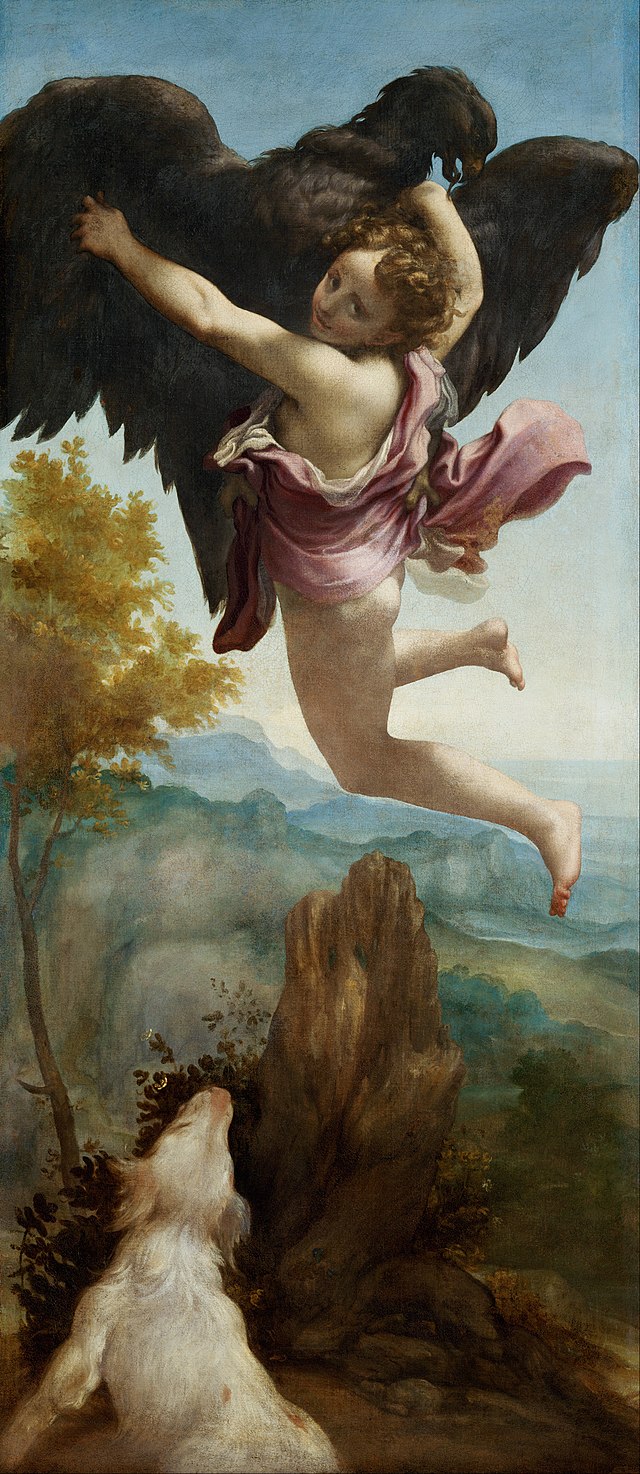
During that time, I decided I wanted to write about Ganymede, the teenager who was kidnapped by Zeus to serve as his cupbearer on Olympus. Zeus sees Ganymede on the earth below, decides he's the coolest kid ever, changes into an eagle, and snatches Ganymede up to Olympus. Zeus then persuades Hebe to make Ganymede immortal, then dumps Hebe as his cupbearer and gives that exalted position to Ganymede.
Only two and a half stories about Ganymede have survived--the story of his kidnapping, a mention in the Iliad about Zeus giving Ganymede's father a set of horses in payment for the loss of his son (that's the half), and a story in which Ganymede loses a game of dice against Eros, and gets mad at him. That's it.
When I got older and read the actual material instead of the summaries and children's versions, I learned that Ganymede was more than Zeus's cupbearer. Zeus also took Ganymede to his bed. This was part of Greek culture--a powerful man would often serve as a mentor/teacher/second father/love interest to a teenaged male. Usually the parents went along with this: "Good news, son! Your uncle has offered to be your mentor!" So Ganymede was a mythological parallel to this mortal custom.
The stories, however, never went into what it was like. What was it LIKE for Ganymede to be
snatched away from his family and friends and suddenly make into the cupbearer and lover of the king of gods? You have the ultimate mentor, but it wasn't anything you'd asked for. Your culture teaches you that being taken to this guy's bed is a good thing, or at least something you can put up with because all of us men went through it, but how do you =really= handle it?
I ended up using my therapist as a resource here. She had counseled many survivors of sexual assault and was an expert. I told her about the book and said my theory was that a teenager in Ganymede's position would have a lot of mixed feelings.
 Sexual assault victims often feel shame because our society has (incorrectly) decreed that victims of sexual assault have done something wrong, that they're bad people who have become further soiled. But Ganymede's culture says that being chosen as a mentee is an honor and a duty, and if you're chosen by the king of gods himself, you must be an amazing person.
And yet . . .
Ganymede at a stroke loses his family, his friends, and his home. He changes from a mortal into an immortal. He is thrust into a group of powerful people who see him as a pawn in a greater game that Ganymede himself doesn't quite understand. He's at the beck and call of Zeus, who does some pretty dreadful things. And he'll be a teenager for the rest of his immortal life.
Some major mixed feelings there.
My counselor agreed. "This would be way too complex for it to be one-sided," she said (or my notes say she said). "He would love it one moment and hate it the next. There would likely be periods of great sadness and great happiness until he adjusted. You can love and hate someone--people do that all the time, especially when it comes to sex, or to someone you're =supposed= to love but aren't sure you do, or with someone you think you love but don't understand why. Don't be afraid to show that between Ganymede and Zeus."
I set out to explore this in DANNY. Or at least, partly. Half the book is set in ancient Greece and half the book is set in modern America. Danny tells Ganymede's story while he tells his own, and the two overlap in strange ways. It's the most complicated, layered novel I've ever written, with plenty of shout-outs to lovers of Greek mythology.
Available at Book View Cafe: http://bookviewcafe.com/bookstore/book/danny/
Steven's Blog: http://spiziks.livejournal.com
Steven's web page: http://www.stevenpiziks.com
Too much rage, too much helplessness. Just too much. So I started seeing a counselor, and I saw her for several years.During that time, I decided I wanted to write about Ganymede, the teenager who was kidnapped by Zeus to serve as his cupbearer on Olympus. Zeus sees Ganymede on the earth below, decides he's the coolest kid ever, changes into an eagle, and snatches Ganymede up to Olympus. Zeus then persuades Hebe to make Ganymede immortal, then dumps Hebe as his cupbearer and gives that exalted position to Ganymede.
Only two and a half stories about Ganymede have survived--the story of his kidnapping, a mention in the Iliad about Zeus giving Ganymede's father a set of horses in payment for the loss of his son (that's the half), and a story in which Ganymede loses a game of dice against Eros, and gets mad at him. That's it.
When I got older and read the actual material instead of the summaries and children's versions, I learned that Ganymede was more than Zeus's cupbearer. Zeus also took Ganymede to his bed. This was part of Greek culture--a powerful man would often serve as a mentor/teacher/second father/love interest to a teenaged male. Usually the parents went along with this: "Good news, son! Your uncle has offered to be your mentor!" So Ganymede was a mythological parallel to this mortal custom.
The stories, however, never went into what it was like. What was it LIKE for Ganymede to be
snatched away from his family and friends and suddenly make into the cupbearer and lover of the king of gods? You have the ultimate mentor, but it wasn't anything you'd asked for. Your culture teaches you that being taken to this guy's bed is a good thing, or at least something you can put up with because all of us men went through it, but how do you =really= handle it?
I ended up using my therapist as a resource here. She had counseled many survivors of sexual assault and was an expert. I told her about the book and said my theory was that a teenager in Ganymede's position would have a lot of mixed feelings.
Sexual assault victims often feel shame because our society has (incorrectly) decreed that victims of sexual assault have done something wrong, that they're bad people who have become further soiled. But Ganymede's culture says that being chosen as a mentee is an honor and a duty, and if you're chosen by the king of gods himself, you must be an amazing person.And yet . . .
Ganymede at a stroke loses his family, his friends, and his home. He changes from a mortal into an immortal. He is thrust into a group of powerful people who see him as a pawn in a greater game that Ganymede himself doesn't quite understand. He's at the beck and call of Zeus, who does some pretty dreadful things. And he'll be a teenager for the rest of his immortal life.
Some major mixed feelings there.
My counselor agreed. "This would be way too complex for it to be one-sided," she said (or my notes say she said). "He would love it one moment and hate it the next. There would likely be periods of great sadness and great happiness until he adjusted. You can love and hate someone--people do that all the time, especially when it comes to sex, or to someone you're =supposed= to love but aren't sure you do, or with someone you think you love but don't understand why. Don't be afraid to show that between Ganymede and Zeus."
I set out to explore this in DANNY. Or at least, partly. Half the book is set in ancient
Greece and half the book is set in modern America. Danny tells Ganymede's story while he tells his own, and the two overlap in strange ways. It's the most complicated, layered novel I've ever written, with plenty of shout-outs to lovers of Greek mythology.Available at Book View Cafe: http://bookviewcafe.com/bookstore/book/danny/
Steven's Blog: http://spiziks.livejournal.com
Steven's web page: http://www.stevenpiziks.com


![[identity profile]](https://www.dreamwidth.org/img/silk/identity/openid.png)
no subject
Date: 2015-06-30 01:56 am (UTC)no subject
Date: 2015-06-30 04:10 pm (UTC)https://upload.wikimedia.org/wikipedia/commons/thumb/4/4b/Berlin_Painter_Ganymedes_Louvre_G175.jpg/800px-Berlin_Painter_Ganymedes_Louvre_G175.jpg
Later paintings (Renaissance) showed Ganymede as a young child, barely an infant (as in Rembrandt's "Rape of Ganymede").
no subject
Date: 2015-07-01 05:48 pm (UTC)There are a lot of poems about men and boys that have survived.
no subject
Date: 2015-07-01 06:33 pm (UTC)no subject
Date: 2015-07-01 06:47 pm (UTC)no subject
Date: 2015-07-02 05:57 pm (UTC)Plus ca change...